
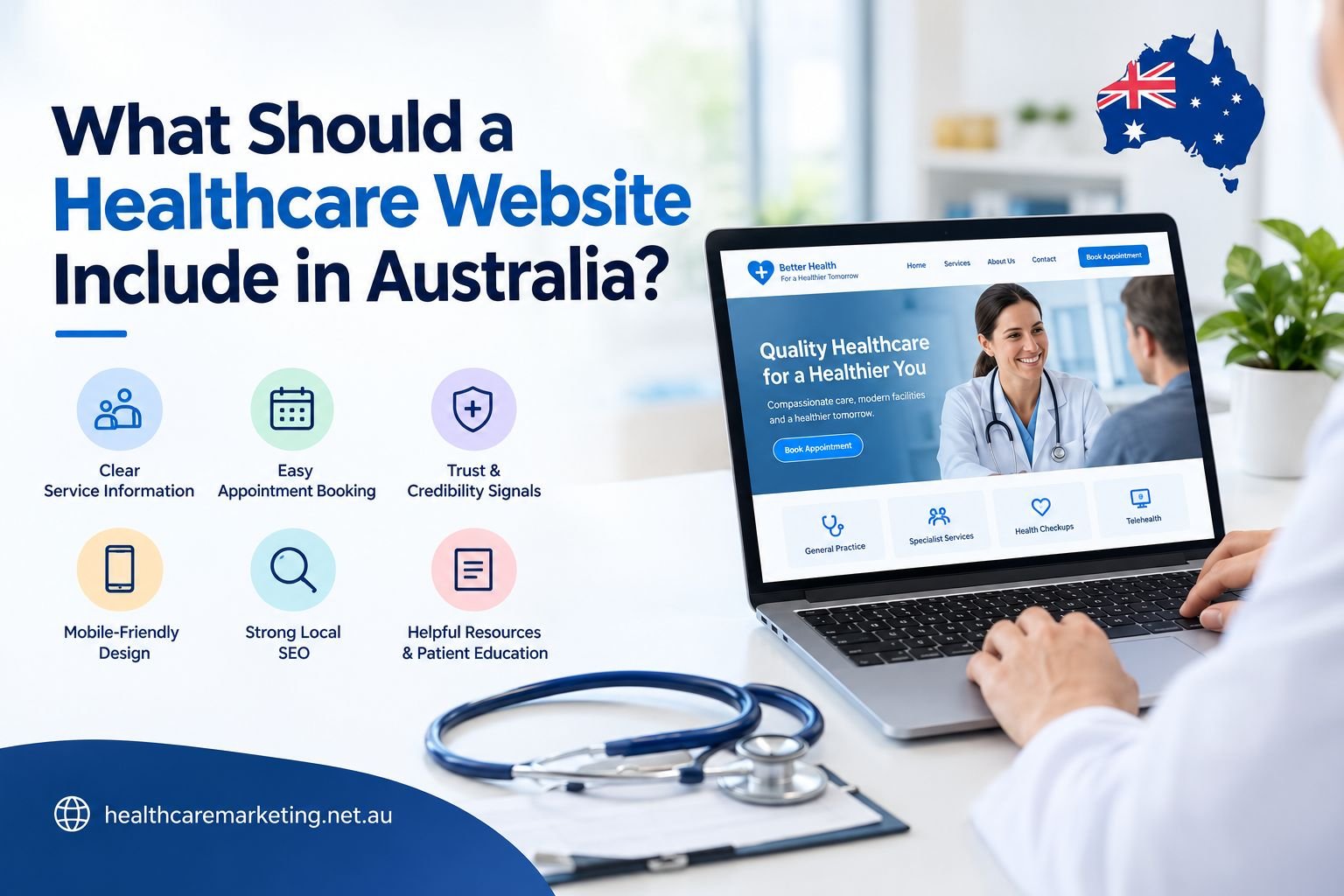
A healthcare website often becomes the first place where a patient learns about a clinic, doctor or health service. People want clear answers, trusted information and an easy way to book an appointment. A confusing website can make them leave before they contact your practice.
Good healthcare website design should put the patient first. It should explain your services, introduce your team, support online bookings and make key information easy to find. It should also consider Australian privacy, accessibility and health advertising requirements.
So, what should an Australian healthcare website include? Let’s look at the main elements that can make a website useful, clear and easy to use.
Clear Information About Your Healthcare Services
Patients should not have to guess what your practice offers. Your website should explain each service in plain language and help visitors understand whether your clinic can meet their needs.
A strong website design for healthcare should give every main service its own clear section or page. Each page can explain:
- What the service involves
- Who the service may suit
- What patients can expect
- How to access the service
- How to book an appointment
- Where the service is available
Keep the language simple. Avoid large blocks of clinical terms that may confuse someone who does not work in healthcare.
Your service pages should also provide factual information and avoid claims that could mislead patients. AHPRA states that advertising for regulated health services must provide accurate information and support claims with acceptable evidence.
Simple Navigation That Helps Patients Find Answers
A healthcare website design can contain many pages. However, patients should still find what they need without getting lost.
Good healthcare website ui design creates a clear path through the site. The main menu should use familiar labels such as:
- Services
- Our Team
- About Us
- Locations
- Fees
- Contact
- Book an Appointment
Important information should not be several clicks away from your site’s visitors. Your visitors should be able to reach a service, a practitioner profile or a booking page without having to perform an extensive search of your site.
Before your visitors reach your practice, think about the questions that they might have. Your website’s navigation should help to answer those questions in the right order.
Online Appointment Booking
Online booking has become an important part of the patient journey. Many people prefer to check available times and book an appointment without making a phone call.
A strong medical and healthcare website design should connect with the booking system used by your practice. The booking button should stand out and appear in useful places across the site.
For example, you can place a booking option:
- In the main navigation
- On service pages
- On practitioner profiles
- Near contact details
- At the end of key pages
The process should work well on mobile devices too. A patient should not need to pinch, zoom or search for the booking button.
Practitioner Profiles That Build Trust
Patients often want to know who will care for them before they make an appointment. Practitioner profiles can help create that connection.
A useful profile can include the practitioner’s:
- Name and professional title
- Qualifications
- Areas of practice
- Professional experience
- Registration details where relevant
- Languages spoken
- Clinical interests
In the website design for healthcare clinics, it is essential to give each practitioner their own clear profile page instead of placing the whole clinic team into one section of the website.
Each practitioner’s profile should be factual and easy to scan. This allows patients to understand who provides the services that the clinic offers and helps them to choose the right practitioner for their specific needs.
Mobile-Friendly Pages
Many patients use a phone to search for a clinic, check opening hours or book an appointment. Your website needs to work across phones, tablets and desktops.
Good medical website design should keep text readable, buttons easy to tap and menus simple on smaller screens.
Check the mobile experience for common tasks such as:
- Finding a phone number
- Checking opening hours
- Reading service information
- Finding the clinic address
- Booking an appointment
- Completing a contact form
A responsive website should adapt to different screen sizes without making the user work harder.
Accessibility for Every Patient
Healthcare information should be accessible to as many people as possible. Patients may have vision, hearing, movement or cognitive needs that affect how they use a website.
A good healthcare website ui design should consider accessibility from the start. This can include readable text, strong colour contrast, useful labels, keyboard-friendly navigation and alternative text for images.
Healthdirect states that its digital resources follow WCAG Level AA accessibility requirements. Australian Digital Health Agency guidance also refers to WCAG 2.1 Level AA.
Accessibility can also improve the experience for older users and people using mobile devices.
Privacy and Website Security
Healthcare websites may collect sensitive information through contact forms, booking forms and patient portals. That means privacy should form part of the website plan from the beginning.
Australian healthcare organisations that collect health information need to consider the Privacy Act 1988 and Australian Privacy Principles.
Your website should use secure connections and protect information collected through online forms. You need to analyse how booking systems and patient portals protect personal health information when your website establishes connections with these platforms.
A clear privacy policy can also help visitors understand what information your practice collects and why.
Accurate and Trustworthy Content
Patients want information they can understand and trust. Your website content should show who provides the information and when the content was reviewed.
This matters for medical practice website design, where service information can affect a patient’s decisions.
Consider adding:
- Practitioner names and credentials
- Content review dates
- Clear service descriptions
- Contact details
- Clinic location details
- Relevant sources where needed
Healthdirect’s publishing standards highlight clear page titles, visible branding, attribution and referenced information as part of good health content.
Keep your content fresh. Remove old information when services, staff, prices or opening hours change.
AHPRA-Aware Website Content
Healthcare providers in Australia need to take advertising rules into account when planning their websites. A website can promote a regulated health service, so its claims and presentation need care.
Medical and healthcare website design should support clear and factual content rather than promises about results. AHPRA provides advertising guidance for registered health practitioners and regulated health services.
Before publishing content, review statements about treatments, outcomes, qualifications and services. Avoid wording that could create unrealistic expectations or mislead patients.
The exact requirements can depend on the type of healthcare service, so providers should check the current rules that apply to their profession.
Location and Contact Details
Patients need practical information before visiting a healthcare provider. Your website should make these details easy to find.
Include your:
- Full clinic address
- Phone number
- Opening hours
- Email address where appropriate
- Parking information
- Public transport details
- Accessibility information
- Booking options
For clinics with more than one location, create clear location information for each site. This also helps visitors find the right clinic without confusion.
Search-Friendly Website Structure
A healthcare website design needs more than attractive pages. Patients must be able to find those pages through search engines.
Good medical website design supports a clear page structure, useful headings, descriptive page titles and relevant internal links.
For example, a physiotherapy clinic may have separate pages for:
- Physiotherapy
- Sports physiotherapy
- Post-surgery rehabilitation
- Back pain treatment
- Each clinic location
- Individual practitioners
The structure should match what patients search for while keeping the information useful and accurate.
Fast Loading and Easy-to-Use Forms
A slow website can frustrate patients. Long forms can create the same problem.
A well planned website design for healthcare clinics should keep forms short and ask only for information that the practice needs at that stage.
Use clear field labels and simple instructions. Instead of showing an error message if a patient makes an error, explain what needs to change. Pages should load well on mobile connections. Health information should not feel difficult to access.
What Makes a Healthcare Website Work Well?
The strongest healthcare websites bring several elements together. They do not focus on appearance alone.
A useful website should:
- Explain services in simple language
- Help patients find the right practitioner
- Make booking easy
- Work well on mobile devices
- Support accessibility
- Protect personal information
- Follow relevant advertising requirements
- Provide accurate contact and location details
- Keep information clear and current
This is where healthcare website design becomes more than a visual project. It shapes how people find information, understand services and take the next step.
Build a Website Around Your Patients
A healthcare website should answer patient questions before they pick up the phone. It should feel clear, calm and easy to use from the first visit.
The best approach to healthcare website design starts with understanding your patients, services and daily practice needs. From there, you can plan the structure, content, booking journey and visual design around real user needs.
Whether you run a GP clinic, specialist practice, allied health service or larger healthcare organisation, the right website can create a smoother path from search to appointment.
Good healthcare website UI design makes information easier to find. Strong medical practice website design makes your services and team easier to understand. And thoughtful medical and healthcare website design brings trust, accessibility, privacy and usability into one experience.
When these parts work together, your website becomes more than an online brochure. It becomes a useful front door to your healthcare service.
FAQs
What should a healthcare website include?
A healthcare website should include clear service information, practitioner profiles, appointment booking, contact details, opening hours, location information, privacy details and accessible content that helps patients understand your services and take the next step.
Why is mobile-friendly design important for healthcare websites?
Mobile-friendly design allows patients to access healthcare services through their mobile phones while they can also view clinic hours and reach medical facilities for appointment scheduling. The responsive design structure enhances screen adaptability which creates improved reading experiences and better navigation through user-friendly interfaces and multiple device compatibility.
How can healthcare website design build patient trust?
Clear service information, professional practitioner profiles, accurate contact details, secure forms and simple navigation can build trust. A well-structured website also helps patients understand what to expect before they contact or visit your healthcare practice.
What makes a good medical practice website design?
Good medical practice website design combines simple navigation, clear service pages, practitioner information, online booking, mobile usability, accessibility and secure forms. It should answer common patient questions while making contact and appointment booking easy.